

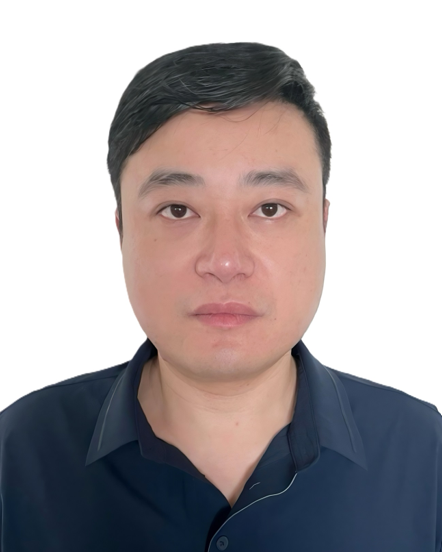
姓名及職稱
彭俊教授
學校郵箱
jpeng@cityu.edu.mo
辦公室電話
+86 13684919650
學歷
2018 教育技術學博士, 香港大學, 中國香港
2009 教育技術學碩士,湖南大學,中國
2004 電腦專業學士,湖南師範大學,中國
現任
澳門城市大學教育學院博士/碩士生導師
寧波大學教授,博士生導師
香港大學榮譽副教授,博士生導師
曾任教科目
博士課程:
進階教育研究方法
博士論文準備
教育品質評估與改進,
教育機構變革,
全球化與教育的比較研究,
成人教育的理論、方法與實踐
碩士課程:
教育研究方法
資訊科技與學習
成人教學策略
多媒體技術教學的應用與開發
資訊技術與學習
課程設計與實施
當代教學熱點議題探討
混合式教學設計
數碼學習熱點議題探討
研究方向
人工智慧教育
混合式學習
高等教育學
創新人才培養
課程設計與教學法
研究及出版
期刊論文(英文,*為通訊作者):
1. Peng, J., Hao, M., Chen, B. et al (2025). Cultivating computational thinking in a STEM course through the ICDCO instructional model. Education and Information Technologies. https://doi.org/10.1007/s10639-025-13716-0 (SSCI, Q1, JIF5.5)
2. Cao, h.,Yu, X,. Han, p,. Peng, j*,. Li, D (2025) . Interactive learning system neural network algorithm optimization. Sci Rep 15, 35498 (2025). https://doi.org/10.1038/s41598-025-19436-2 (SSCI,Q1)
3. Peng, J., & Li, Y. (2025). Frontiers of Artificial Intelligence for Personalized Learning in Higher Education: A Systematic Review of Leading Articles. Applied Sciences, 15(18), 10096. https://doi.org/10.3390/app151810096 (SSCI,Q1 IF 2.7)
4. Peng, J., Sun, M., Yuan, B. et al (2024). Visible thinking to support online project-based learning: Narrowing the achievement gap between high- and low-achieving students. Education and Information Technologies 29, 2329–2363. https://doi.org/10.1007/s10639-023-11896-1 (SSCI, Q1, JIF5.5)
5. Zuming Qin, Yuting Huang, Xiaoke Zhang, Siyu Su (2025), Huilin Zhang & Jun Peng*.Anxiety or reflection? exploring profiles of death awareness among chinese nurses: a latent profile analysis. BMC Psychology,13, 193. https://doi.org/10.1186/s40359-025-02501-w (SSCI,Q2)
6. Peng, J., Dai, Y., & Li, Y. (2024). Integrating online training and knowledge sharing among teachers through a cloud-based video platform. Knowledge Management & E-Learning, 16(4), 671–696. (ESCI and Scopus Indexed,Q1)
7. Xu, Y., Peng, J*., Jing, F. et al (2024). From wearables to performance: how acceptance of IoT devices influences physical education results in college students. Scientific Report 14, 23776. https://doi.org/10.1038/s41598-024-75071-3 (SSCI,Q1)
8. Hao, M.; Wang, Y.; Peng, J* (2024). Empirical Research on AI Technology-Supported Precision Teaching in High School Science Subjects. Applied Sciences, 14, 7544. https://doi.org/10.3390/app14177544 (SSCI,Q1 IF 2.7)
9. Peng, J., Chen, K., Gong, Y., Zhang, T., Su, B. Cyclic Consistent Image Style Transformation: From Model to System. Applied Sciences. 2024, 14, 7637. https://doi.org/10.3390/app14177637 (SSCI,Q1 IF 2.7)
10. Peng J, Su B. Aspect Sentiment Triplet Extraction Based on Deep Relationship Enhancement Networks. Applied Sciences. 2024; 14(5):2221. https://doi.org/10.3390/app14052221 (SSCI,Q2 IF 2.7)
11. Jiaxin Gong, Xiaofan Liu, Jun Peng, Baichang Zhong. Remixing between imitation and originality: Exploring creative behaviors in scratch projects. Thinking Skills and Creativity. 2024,54, https://doi.org/10.1016/j.tsc.2024.101641 (SSCI,Q2 IF 3.652)
12. Yuming Xu, Jun Peng*,Zechao Cai, Yumin Zeng, Bozhi Huang.(2024). Research on the Implementation Dilemma and Reform Path of School Sports Venue Opening Policy. Journal of Higher Education Teaching, 1(3),255-260.
13. Yuming Xu, Jun Peng, Jianwen Zhu, Lu Chen, Zishuo Xu (2024). Influencing Factors and Implementation Strategies of Social Opening of University Sports Venues. Journal of Natural Science Education, 1(3),21-26.
14. Su B, Peng J*. Sentiment Analysis of Comment Texts on Online Courses Based on Hierarchical Attention Mechanism. Applied Sciences. 2023; 13(7):4204. https://doi.org/10.3390/app13074204 (SSCI,Q2 IF 2.7)
15. Shu, X., Peng, J*., & Wang, G. (2023). Deciding Alone or with Others: Employment Anxiety and Social Distance Predict Intuitiveness in Career Decision Making. International Journal of Environmental Research and Public Health, 20(2), 1484.(SSCI,Q1,IF4.614)
16. Peng, J.; Yuan, B.; Sun, M.; Jiang, M.; Wang, M. Computer-Based Scaffolding for Sustainable Project-Based Learning: Impact on High- and Low-Achieving Students. Sustainability 2022, 14, 12907. https://doi.org/10.3390/su141912907 (SSCI,Q2,index 3.9)
17. Baohua Su, Jun Peng, Strategies for Cultivating Chinese Cultural Identity of Overseas Students in Guangdong-Hong Kong-Macao Greater Bay Area. Journal of Sociology and Ethnology (2023) Vol. 5: 53-60. DOI: http://dx.doi.org/10.23977/jsoce.2023.050209.
18. Yuming Xu, Jun Peng*, Jianwen Zhu, Yushen Li, Yingsheng Zhu. (2023). The Application of Modern Educational Technology in College Physical Education under the Background of Informatization. Adult and Higher Education, 5(1), 141-146. DOI: 10.23977/aduhe.2023.050120
19. Li, Y., Peng, J*. & Tao, Y. Relationship between social support, coping strategy against COVID-19, and anxiety among home-quarantined Chinese university students: A path analysis modeling approach. Curr Psychol 42, 10629–10644 (2023). https://doi.org/10.1007/s12144-021-02334-x (SSCI, JCR Q1, JIF 4.297)
20. Li, Y., & Peng, J.* (2022). Evaluation of Expressive Arts Therapy on the Resilience of University Students in COVID-19: A Network Analysis Approach. International Journal of Environmental Research and Public Health, 19(13), 7658. (Published: 23 June 2022) (SSCI&SCI, Q1, JIF4.614)
21. Weichen Jia, Jun Peng*, The Public Sentiment Analysis of Double Reduction Policy on Weibo Platform, Computational Intelligence and Neuroscience, vol. 2022, Article ID 3212681, 9 pages, 2022. https://doi.org/10.1155/2022/3212681 (SCI,Q2, JIF3.12)
22. Chuck Chung Yin Albert,Yuqi Sun,Guang Li,Jun Peng* ,Feng Ran,Zheng Wang,and Jie Zhou(2022).Identifying and Monitoring Students’ Classroom Learning Behavior Based on Multisource Information,Mobile Information Systems,Volume 2022, Article ID 9903342, 8 pages,https://doi.org/10.1155/2022/9903342 (SCIE,Q4,IF 1.863)
23.Jie Zhou, Feng Ran, Guang Li,Jun Peng*,Kun Li, Zheng Wang (2022).Classroom learning status assessment based on deep learning.Mathematical Problems in Engineering, Volume 2022, Article ID 7049458, 9 pages https://doi.org/10.1155/2022/7049458 (SCIE Q4 IF 1.7).
24. Meng Sun, Minhong Wang, Rupert Wegerif, Jun Peng (2022). How do students generate ideas together in scientific creativity tasks through computer-based mind mapping? Computers & Education, 176: 104359. (SSCI Q1 IF 11.182, ranked No.3 in education and educational research)
25. Baohua Su,Jun Peng*(2022).Research on the Current Situation and Strategy of "Internet +" Chinese Online Education.Journal of Contemporary Educational Research, Volume 6, Issue 8, 2022,62-68
26. Li, Y., Jun Peng*. Does social support matter? The mediating links with coping strategy and anxiety among Chinese college students in a cross-sectional study of COVID-19 pandemic. BMC Public Health 2021, 1298 (SCI,SSCI, JCR Q2 IF 4.135).
27. Yue Li, Jun Peng* (2020). Coping Strategies as Predictors of Anxiety: Exploring Positive Experience of Chinese University in Health Education in COVID-19 Pandemic. Creative Education, 11(5). (Google-based Impact Factor: 1.01;h5-index Ranking:18)
28. Weichen Jia, Jun Peng*, Na Cai(2020). An approach to improving the analysis of literature data in Chinese through an improved use of Citespace. Knowledge Management & E-Learning: 12(2), 256-267 (ESCI and Scopus Indexed,Q1)
29. Jun Peng, Bei Yuan, J. Michael Spector, and Minhong Wang (2020). Integrating technology in programming learning and instruction: A critical review. International Journal of Smart Technology and Learning, 1(4), 323-343. (ACER Indexed).
30. Bei Yuan, Minhong Wang, Jeroen van Merriënboer, Xu Tao, Andre Kushniruk and Jun Peng (2020). Investigating the Role of Cognitive Feedback in Practice-Oriented Learning for Clinical Diagnostics. Vocations and Learning, 13, 159–177 (2020). (SSCI IF 1.343)
31. Jun Peng, Minhong Wang, Demetrios Sampson, and Jeroen van Merriënboer (2019). Using a visualization-based and progressive learning environment as a cognitive tool for learning computer programming. Australasian Journal of Educational Technology, 35(2), 52-68. (SSCI,Q1,IF 4.1)
32. Minhong Wang, Bei Yuan, Paul A. Kirschner, Andre W. Kushniruk, and Jun Peng (2018). Reflective learning with complex problems in a visualization-based learning environment with expert support. Computers in Human Behavior, 87, 406-415. (SSCI IF 4.306)
33. Jun Peng, Minhong Wang, & Demetrios Sampson (2017). Visualizing the Complex Process for Deep Learning with an Authentic Programming Project. Educational Technology & Society, 20(4), 275-287. (SSCI Q1 IF 4.02)
34. Bei Yuan, Minhong Wang, Andre Kushniruk, and Jun Peng (2017). Deep Learning towards Expertise Development in a Visualization-based Learning Environment. Educational Technology & Society, 20(4), 233-246. (SSCI IF 2.133)
35. Bei Yuan, Minhong Wang, Andre W. Kushniruk, and Jun Peng (2016). Design of a computer-based learning environment to support diagnostic problem solving towards expertise development. Knowledge Management & E-Learning, 8(4), 540-549. (ESCI indexed)
36. Minhong Wang, Jun Peng, Bo Cheng, Hance Zhou, and Jie Liu, (2011). Knowledge Visualization for Self-Regulated Learning, Educational Technology & Society, 14(3), 28-42. (SSCI IF 2.133)
37. Bo Cheng, Minhong Wang, Stephen J.H. Yang, Kinshuk, and Jun Peng (2011). Acceptance of Competency-Based Workplace E-Learning Systems: Effects of Individual and Peer Learning Support, Computers & Education, 57(1), 1317-1333. (SSCI IF 5.627)
期刊論文(中文,*為通訊作者):
1. 胡藝齡, 汪沁嬋, 吳忭 & 彭俊*.(2025) 語義、語用“雙管齊下”:優質資訊技術課堂互動話語自動化分析及特徵發現. 現代遠距離教育, 1-14 (CSSCI).
2. 蔣一林,劉小鈺,毛雪,彭俊*,肖佳穎.以學生為本的校家社協同模式下的學校創新實踐研究[J].國際化教育科學與理論,2025,4(1):28-31.
3. 劉煒, 馬振磊, & 彭俊 (2025). 生成式人工智慧賦能高校體育教師跨學科教學能力:作用機制,潛在挑戰與實踐路徑. 長沙大學學報.
4. 周宇函,彭俊*,胡海建.(2025).產學合作提升國家競爭力的現實困境和突破路徑.廣東石油化工學院學報(02),101-105.
5. 劉煒,彭俊*.人工智慧賦能中國武術國際傳播的路徑研究[J].瀋陽體育學院學報,2024,43(4):124-130 (CSSCI)
6. 龔玉清,朱雲,梁豔春,彭俊,蘇寶華.電腦應用基礎課程的“四新”思政融合路徑探索,電腦教育[J],2024(5),41-46
7. 周師宇,賈玲,彭俊*,澳門中小學教師專業發展支持機制研究[J].上海教育評估研究,2024,12(6):71-76.
8. 李建,彭俊. 基於OMO的課堂教學改進之行動研究——以《基礎護理學》課程為例[J].發展教育學, 2024,12(5):27-31.
9. 王遠遠,彭俊.推進職業教育高質量發展的政策特徵、對策與反思——基於20份省級政策文本的分析[J].武漢職業技術學院學報,2024,23(01):5-11.
10.劉煒,彭俊,周柏玉.人工智慧融入體育教育的價值辨析、現實審視與進路探析[J].瀋陽體育學院學報,2023,42(6):61-67 (CSSCI).
11.王遠遠,彭俊. 基於三維框架的省級教育資訊化政策文本量化分析[J]. 重慶師範大學學報(社會科學版),2023,43(2):85-96. DOI:10.19742/j.cnki.50-1164/C.230207.
12.王遠遠,彭俊. 省級政府執行"雙減"政策的現狀、問題與對策—政策工具視角下的文本內容分析[J]. 江漢大學學報(社會科學版),2023,40(6):117-128. DOI:10.16387/j.cnki.42-1867/c.2023.06.011.
13.劉龍慶,彭俊.(2023).教師職業倦怠問題研究——以線上培訓D機構為例. 繼續教育研究,2023(10),63-68. doi:CNKI:SUN:JIXE.0.2023-10-012.
14.塗艾林,彭俊. (2023). 三喻文化視角下農村留守學生家庭教育缺失現狀及對策研究. 繼續教育研究,2023(11), 109-112.
15.龔玉清,彭俊*,陳鈺穎,王業欣,電腦應用基礎課程思政教材建設,電腦教育[J],2023(8),212-216
16.彭俊,李悅,澳門大學生國情教育及其影響因素探究——基於整體變化評定模型的實證分析. 澳門研究, 2022(1)
17.王遠遠, 彭俊*, & 婁傲. (2022). 國際高等教育研究的熱點與前沿. 揚州大學學報:高教研究版, 26(3), 4-5.
18.蘇寶華,張可澄,彭俊*,基於心流體驗的教學活動設計策略,中學生報·教育教學研究[J],2022(49),37-39
19.許育銘,彭俊* (2022).基於citespace的中國近二十年資訊技術研究熱點及趨勢分析[J].中學生報·教育教學研究,2022(49),97-99.
20.許育銘,彭俊*.新時代我國青少年競技後備人才培養的現實困境與推進策略[J].運動-休閒:大眾體育,2022(23):0070-0072.
21.劉煒,彭俊,廖振丹(2022). 體育特色小鎮賦能鄉村振興的實施路徑研究——《體育與科學》“鄉村振興與體育特色小鎮建設”學術工作坊綜述[J]. 體育與科學. 2022,43(05), https://doi.org/10.13598/j.issn1004-4590.2022.05.014 (CSSCI,北大核心)
22.邵珊珊,彭俊*(2021). 新冠疫情下基於生態評價視角的疫情中外電商消費者話語分析[J]. 當代外語研究,207(6),132-143.(CSSCI)
23.何彥雨,陳玉美,塗艾林,彭俊(2021). STEAM 教育視域下 綜合實踐活動與勞動教育課程融合設計研究-以“農業機械的發展變化與改進”主題活動為例[J].生活教育.2021(28),125-128.
24.袁蓓, 彭俊, & 肖松. (2021). 基於專家型教師原型的中小學教師教學能力模型. 科學諮詢(25), 2.
25. 賈維辰,彭俊*,任英傑(2021),計算教育學國內發展現狀分析與未來展望——基於語言模型和自然語言生成技術,遠程教育雜誌,264(3),42-51.(CSSCI & 北大核心)
26. 李悅,彭俊*,丁道群.新型冠狀病毒肺炎疫情期間深圳市某高校藝術類大學生應對方式與焦慮的關係[J].醫學與社會,2021,34(11):87-92.(北京大學《中文核心期刊要目總覽》、JST 日本科學技術振興機構資料庫收錄期刊,影響因數1.042)
27. 彭俊, 鄭采星 (2008). 基於的智能問答系統的設計與實現. 中國教育資訊化(高教職教版), Vol.190, 72-74. (北大核心)
會議論文(*為通訊作者):
J. Peng, Y. Xu, N. Wen and S. He, "A Randomized Controlled Trial Exploring the Moderating Effect of University Students' Acceptance of IoT Devices on the Relationship Between IoT Device Usage and Physical Performance," 2025 5th International Conference on Artificial Intelligence and Education (ICAIE), Suzhou, China, 2025, pp. 860-867, doi: 10.1109/ICAIE64856.2025.11158606. (IEEE, EI Indexed)
B. Su, J. Peng*, H. Xu, K. Chen, Z. Zhou and H. Liu, "The Personalized Scene-Based AI Agents: Exploring Chinese Language Learning Among International Students," 2025 5th International Conference on Artificial Intelligence and Education (ICAIE), Suzhou, China, 2025, pp. 117-122, doi: 10.1109/ICAIE64856.2025.11158030.(IEEE, EI Indexed)
B. Su, Q. Chen, J. Peng*, W. Tan and L. Wang, "Enhancing Chinese Character Writing Learning: The Role of MLLM-based Intelligent Tutoring Systems," 2025 5th International Conference on Artificial Intelligence and Education (ICAIE), Suzhou, China, 2025, pp. 194-200, doi: 10.1109/ICAIE64856.2025.11158428.(IEEE, EI Indexed)
W. C. Choi, J. Peng*, I. C. Choi, H. Lei, L. C. Lam and C. I. Chang, "Improving Young Learners with Copilot: The Influence of Large Language Models (LLMs) on Cognitive Load and Self-Efficacy in K-12 Programming Education," 2025 5th International Conference on Artificial Intelligence and Education (ICAIE), Suzhou, China, 2025, pp. 284-288, doi: 10.1109/ICAIE64856.2025.11158328.(IEEE, EI Indexed)
L. C. Lam, W. C. Choi, I. Chong Choi and J. Peng*, "A Comparative Study of Flipped Classroom and Traditional Teaching in Middle School Science Test Review: Effects on Student Achievement and Engagement," 2025 13th International Conference on Information and Education Technology (ICIET), Fukuyama, Japan, 2025, pp. 117-122, doi: 10.1109/ICIET66371.2025.11045967.(IEEE, EI Indexed)
周師宇,彭俊. 三重視角下的“電子檔案袋評價”.中國教師報(教師教育版),2024-07-10,中國教育報刊社,http://paper.chinateacher.com.cn/zgjsb/html/2024-07/10/node_90.htm
王旖,彭俊*. 人工智慧時代教師數字素養評價研究——基於《教師數字素養》行業標準的思考. 第28屆全球華人電腦教育應用大會大會論文集(中文論文) (GCCCE,2024).
彭俊,郝苗苗. 基於計算學徒制的圖形化編程教學模式探究, 第二屆粵港澳促進 STEM 教育大會暨第二屆粵港澳跨學科教育論壇 (2024), 廣州,廣東.
彭俊,郝苗苗. 核心素養視角下AIGC賦能的形成性評估模型的構建與展望, 第28屆全球華人電腦教育應用大會大會論文集(中文論文) (GCCCE,2024). 重慶,中國
HUANG Biyun, HEW Khe Foon, PENG Jun, DAI Yi, JONG Morris Siu-Yung. 使用 GAFCC 遊戲化模型提高線上協作學習背景下的學生參與度. 第28屆全球華人電腦教育應用大會大會論文集(中文論文) (GCCCE,2024).
彭俊,龔玉清,林江鋒. 鄉土文化融入課程思政的現實困境與應對進路——基於面向鄉村教師的調查研究,第三次鄉村教師專業發展論壇(2023),肇慶,廣東.
Guang Li, Wennan Wang, Liukai Zhu, Jun Peng*, Xujia Li, Ruijie Luo (2022). Research frontiers of pre-training mathematical models based on BERT. 2022 IEEE International Conference on Electrical Engineering, Big Data and Algorithms (EEBDA), Changchun, China (IEEE CS (Computer Society) CPS, EI Indexed, Thomson ISTP and Elsevier SCOPUS Indexed)
Baohua Su, Jun Peng* (2021). Language Learning in AVG Games: Design Strategies. 2021 IEEE International Conference on Advances in Electrical Engineering and Computer Applications, Dalian, China(EI Compendex, ISTP (CPCI), Scopus (Elsevier) and Inspec (IET))
Guang Li, Fangfang Liu, CHUCK Chung Yin Albert, Yongde Guo, Jun Peng*, Xujia Li (2021). Analysis of the application of artificial intelligence in the field of education, 2021 International Conference on Artificial Intelligence, Computers and Big Data (AICBD 2021) Qingdao, China (EI Compendex, ISTP (CPCI), Scopus (Elsevier) and Inspec (IET))
Bei Yuan, Jun Peng, Minhong Wang and Liang Kuang (2019). Facilitating Students' Learning through Problem-Solving in a Computer-Based Expert-Supported Learning Environment. The 4th International Conference on Technology in Education, March 2019, Guangzhou, China.
Jun Peng, Stylianos Sergis, Minhong Wang, and Demetrios Sampson (2017). Combining Smart Web-based Learning Environments with Teaching and Learning Analytics to Support Reflection on Project-based Programming Education. Proceedings of the 26th International World Wide Web Conference, published by the ACM Digital Library, April 2017, Perth, Australia.
Jun Peng, Minhong Wang, and Demetrios Sampson (2017). Scaffolding Project-Based Learning of Computer Programming in an Online Learning Environment. Proceedings of the 17th IEEE International Conference on Advanced Learning Technologies (ICALT), July 2017, Timisoara, Romania.
Bei Yuan, Minhong Wang, Andre Kushniruk, and Jun Peng (2013). Technology-Enhanced Learning for Improving Complex Problem-Solving Expertise. Proceedings of the 13th IEEE International Conference on Advanced Learning Technologies (ICALT), July 2013, Beijing, China.
Bei Yuan, Minhong Wang, Andre Kushniruk, and Jun Peng (2013). Design of a Model-Based Expert-Supported Learning Environment for Problem Solving Expertise Development. Proceedings of the 17th Global Chinese Conference on Computers in Education (GCCCE), May 2013, Beijing, China.
Minhong Wang, Jun Peng, Jie Liu, Bo Cheng, and Hance Zhou (2011). Enhancing Online Learning through Knowledge Visualization. Proceedings of 15th Global Chinese Conference on Computers in Education (GCCCE), May 2011, Hangzhou, China.
Minhong Wang and Jun Peng (2010). Design of a Performance-Oriented Learning Ontology. Workshop Proceedings of the 18th International Conference on Computers in Education (ICCE), Dec 2010, Putrajaya, Malaysia.
Jun Peng and Caixing Zheng (2008). Design and realization of intelligent Q/A systems based on knowledge tree. Artificial Intelligence in Education Application International Academic Seminar, IEEE Computer Society, 2008, Wuhan, China.
專著
彭俊,蘇寶華,任英傑(2023),資訊技術時代的學習.暨南大學出版社.
彭俊(2022)新課標背景下義務教育階段教師評價研究. 北京:九州出版社
彭俊(2023)《混合式教學環境的PHOTOSHOP課程設計與校園創作實例》。北京:清華大學出版社
代毅,彭俊 (2023) 中小學數字教材:系統設計、應用策略及行為數據分析,暨南大學出版社.
彭俊,蘇寶華( 2025) 智慧教育: 深度學習與創新思維的培養,暨南大學出版社.
學術獎項
2024首屆全國教學數位化大賽全國賽優秀指導老師獎
2024首屆全國教學數位化大賽全國賽先進個人
2024首屆全國教學數位化大賽高教文科組-學生賽道特等獎
2024首屆全國教學數位化大賽高教文科組-教師賽道二等獎
2023 第十一屆全國大學生數位傳媒科技作品及創意競賽優秀指導老師
2023第十一屆中國大學生數字媒體科技作品及創意競賽一等獎,二等獎,三等獎
2023“《教學設計與實施》粵澳跨校融合式教學應用”入選“慕課十年典型案例集”,高校線上開放課程聯盟
2022廣東省一流本科課程《平面設計》(參與者第三位)
2022第十屆中國大學生數字媒體科技作品及創意競賽一等獎,二等獎,三等獎
2022第十屆全國大學生數位傳媒科技作品及創意競賽優秀指導老師
2021第九屆中國大學生數字媒體科技作品及創意競賽一等獎
2021第九屆全國大學生數位傳媒科技作品及創意競賽優秀指導老師
2021年中國大學生武術錦標賽優秀教練員
2018-2019學年澳門城市大學卓越科研嘉許
2019-2020學年澳門城市大學優秀科研嘉許
2021-2022學年澳門城市大學卓越科研嘉許
2022-2023學年澳門城市大學卓越科研嘉許
2023-2024學年澳門城市大學卓越科研嘉許
專業屬會
2022-至今 教育部高校和國別區域研究基地華南師範大學港澳研究中心特聘教授
2024-至今 教育部教育評價改革研究基地(重慶市教育評估院)兼職研究員
2023-至今 全國師範生人工智慧教育共同體專家組常務理事
2025-至今 中國教育學會中小學資訊技術教育專業委員會常務理事
2025-至今 華人探究學習學會第六屆理事會常務理事
2022-至今 廣東省本科高校教學指導委員會委員(教育技術指導委員會)
2023-至今 高校畢業生就業協會產城校融合與就業工作委員會副秘書長
2024-至今 高校教學發展網路(CHED)學術委員會委員
2021-2026 北京語言大學國際語言服務研究院專家委員會 委員
2020-至今 澳門創新發展研究會 監事
2020-至今 國際(澳門)學術研究院教育發展研究所 研究員
2020-至今 中國人工智能學會會員
2025-至今 澳門城市大學智能教育聯合實驗室學術顧問
2024-至今 副主編, Knowledge Management & E-Learning (Scopus索引,CiteScore 4.7,排名163/1406,教育類Q1)
2022-至今 廣東科學技術職業學院馬克思主義學院特聘教授