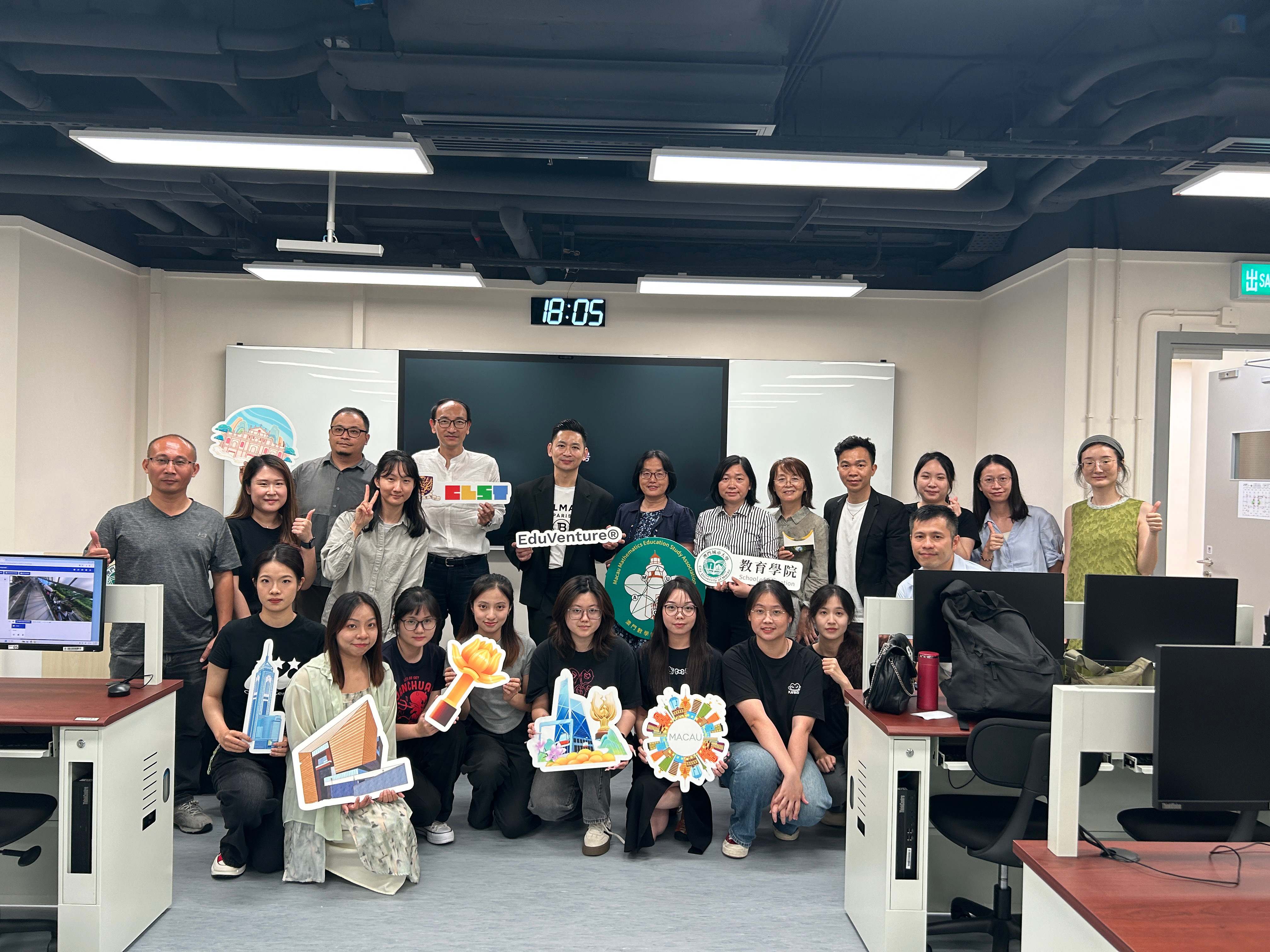
On June 27, the workshop “Theoretical Innovation and Educational Practice of Virtual Reality in Education” was successfully held at the Golden Dragon Campus of City University of Macau.The event was hosted by the Macau Association for Mathematics Education Research, co-organized by the School of Education, City University of Macau, and sponsored by the Macao Foundation.The workshop invited Professor Jong Siu-yung, Professor and PhD Supervisor in the Department of Curriculum and Instruction, and Director of the Centre for Learning Sciences and Technologies at The Chinese University of Hong Kong, as the keynote speaker. ProfessorJong Siu-yung led his research team to guide hands-on practice and explore innovative applications of VR technology in education.
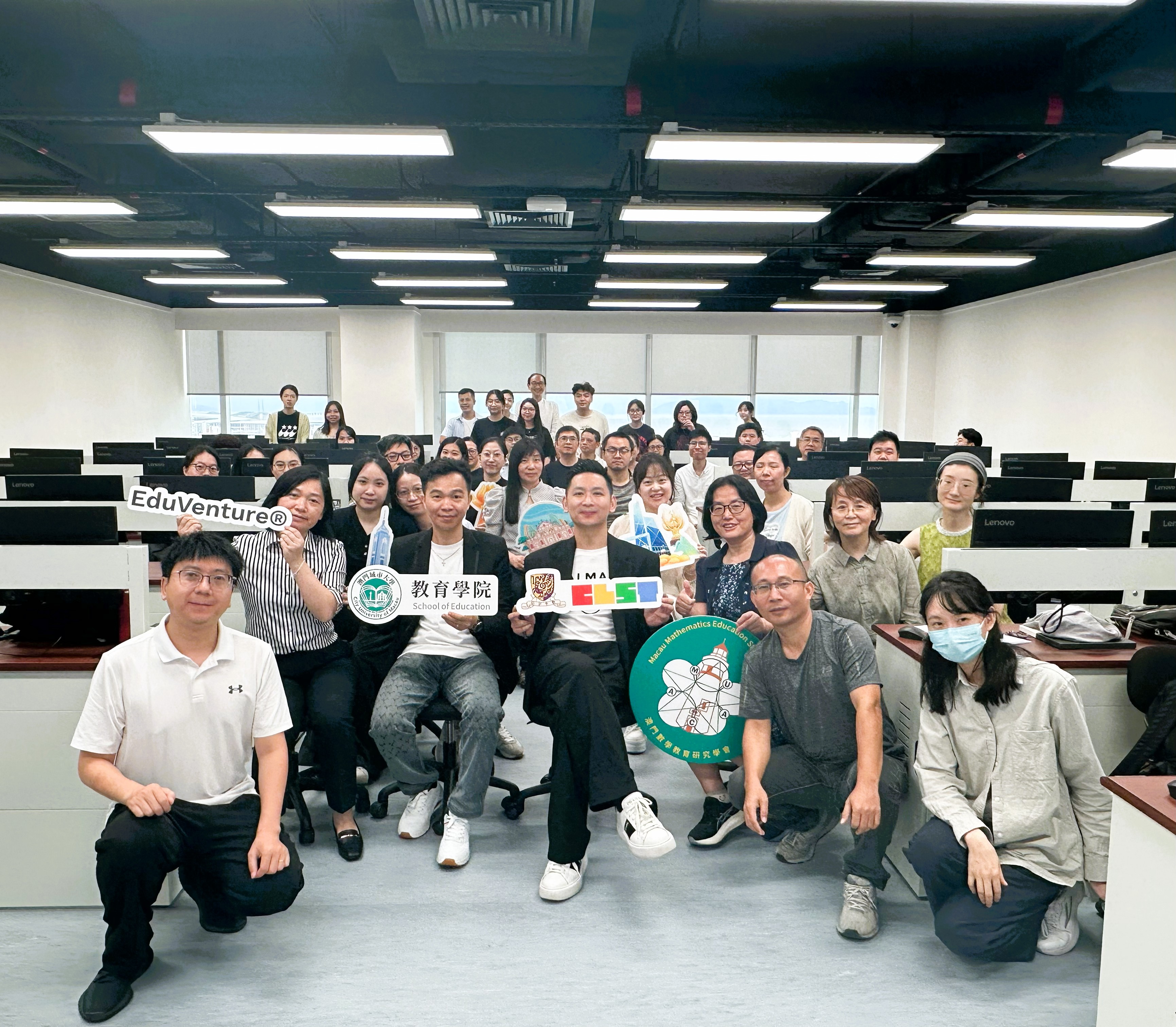
Distinguished guests included: Professor Jiang Chunlian, President of Macau Association for Mathematics Education Research, Dr. Wu Jianzuo, Chairman of Macau Association for Mathematics Education Research, Assistant Professor Huang Biyun, School of Education, City University of Macau. School participants came from Hou Kong Middle School, Women’s General Association School, Colegio Mateus Ricci, Baptist Middle School, Concordia School for Special Education, The International School of Macao, Taipa Fong Chong School, University of Macau, Neusoft Institute Guangdong, as well as master’s and doctoral students from the School of Education, City University of Macau.
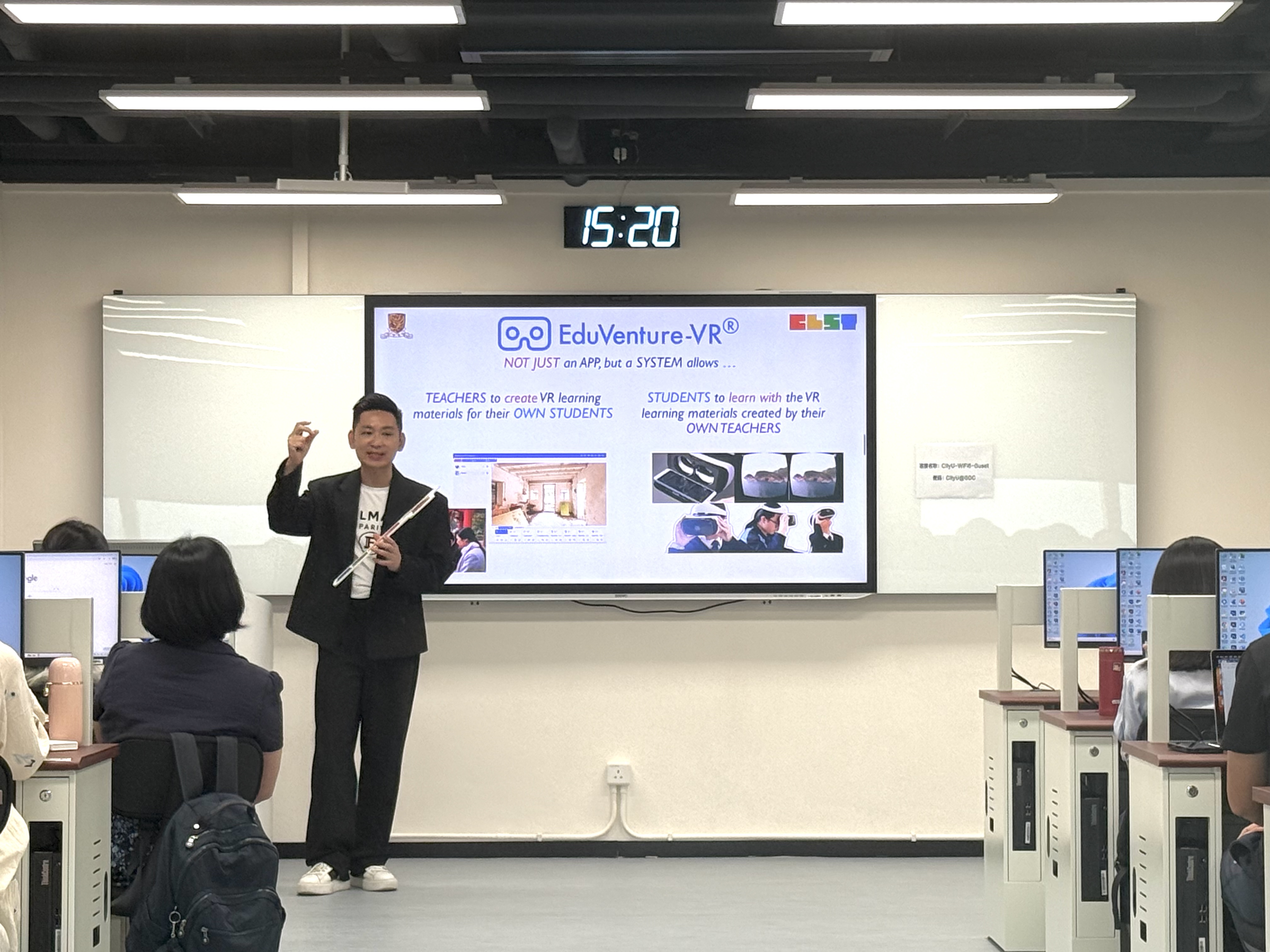
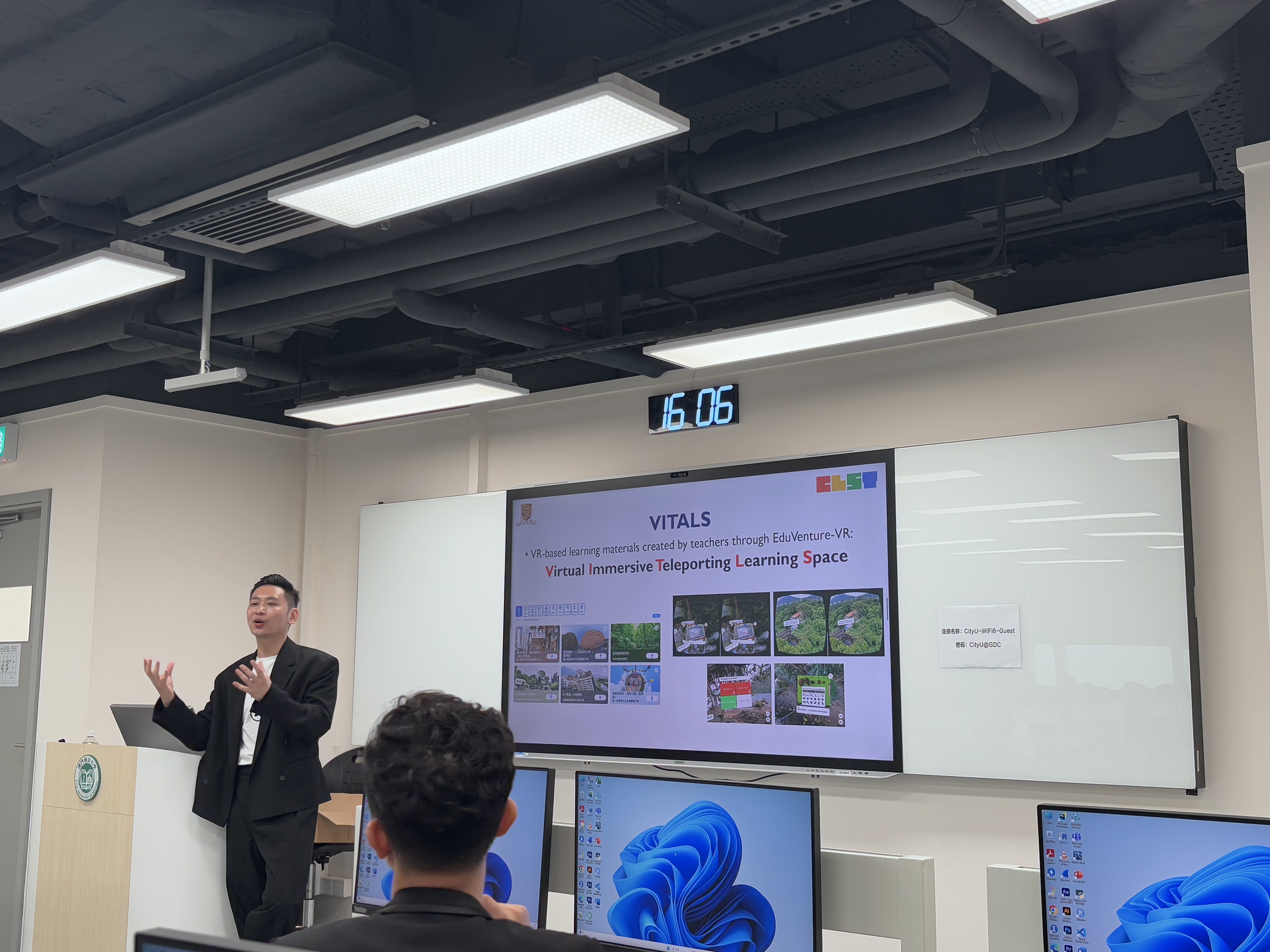
The workshop included both theoretical instruction and practical sessions. As an expert in learning sciences and educational technology, Professor Jong Siu-yung explained in detail the theoretical foundation, design framework, and practical applications of Edu Venture-VR in primary and secondary education. He emphasized that Edu Venture-VR is not merely an application but a comprehensive learning system that provides teachers and students with an environment for creative, interactive, and immersive learning.Constructivism, which highlights students’ active knowledge construction, underpins the VR educational innovation. The design of Edu Venture-VR embodies this philosophy, supporting a paradigm shift from teacher-centered to student-centered instruction, enabling students to explore and experience knowledge actively in virtual environments.
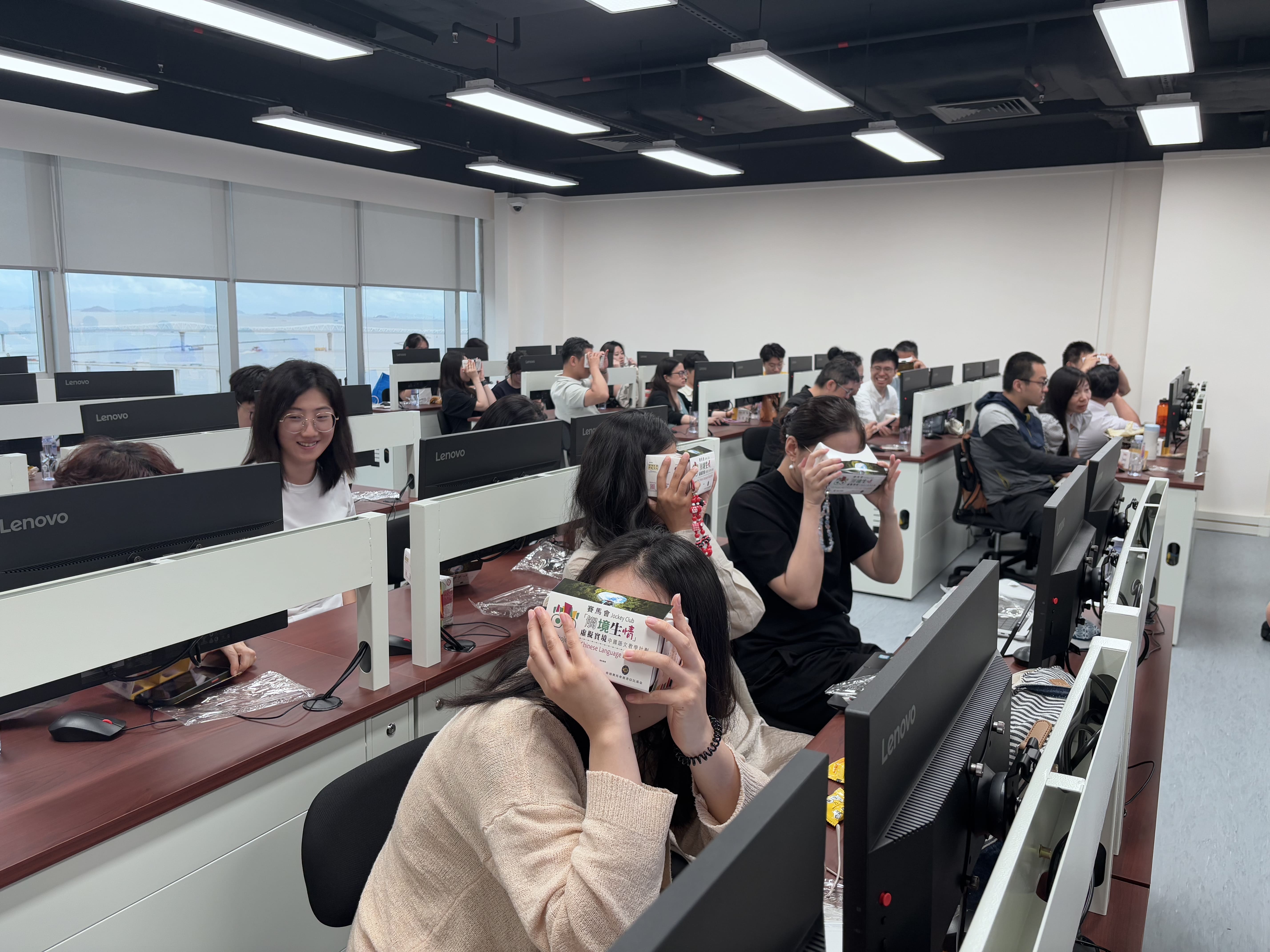
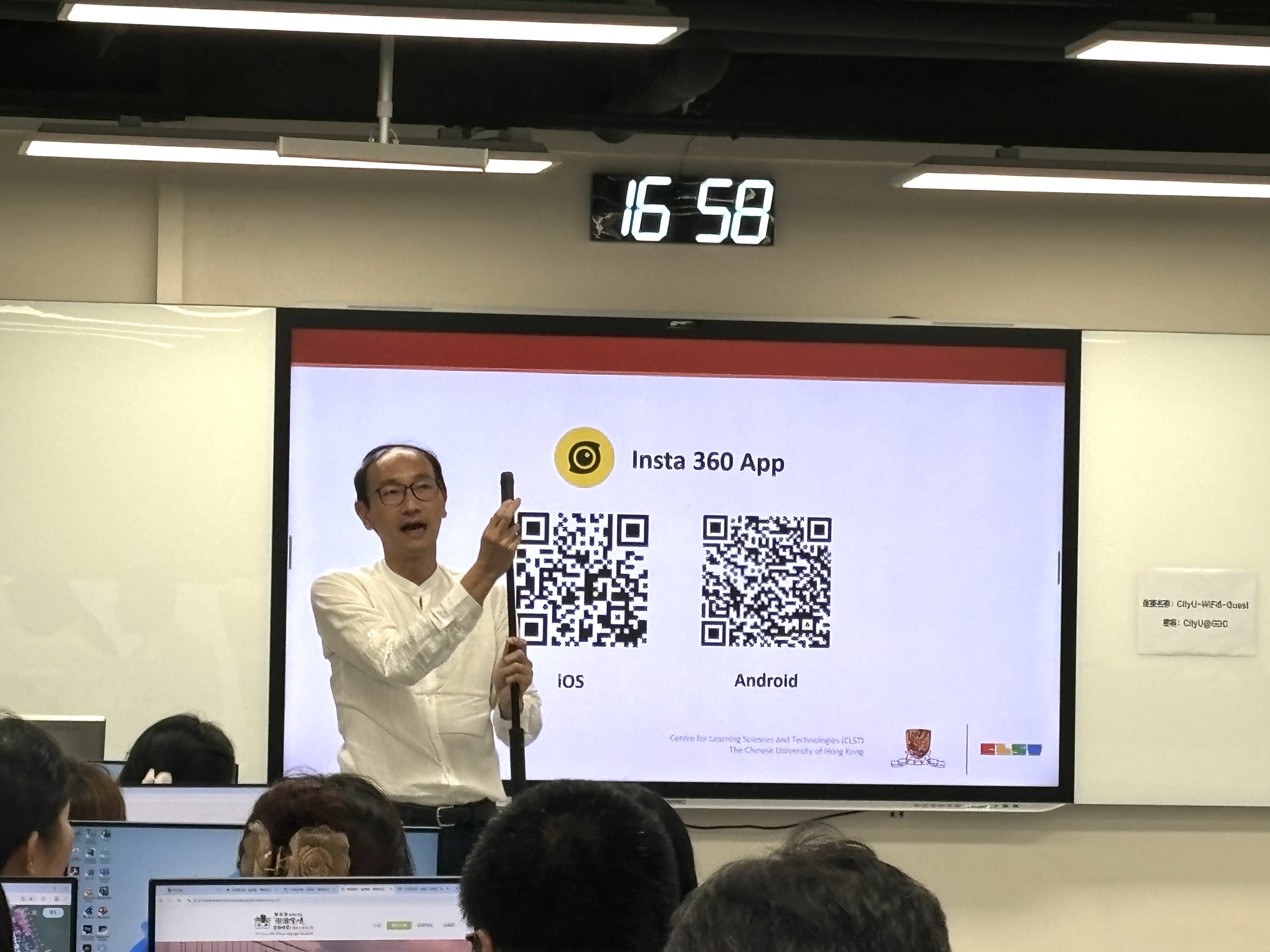
Using the engaging question “Why has Andy Lau been popular for so many years?” as an introduction, Professor Jong Siu-yung explained how to design effective inquiry tasks. He stressed that high-quality inquiry tasks should be open-ended, with no fixed answers to stimulate thinking and creativity, and controversial to encourage discussion from diverse perspectives and deepen understanding through interaction. Through these authentic cases, participants gained intuitive, in-depth insights into the significant potential of VR in teaching and received fresh inspiration for pedagogical innovation.
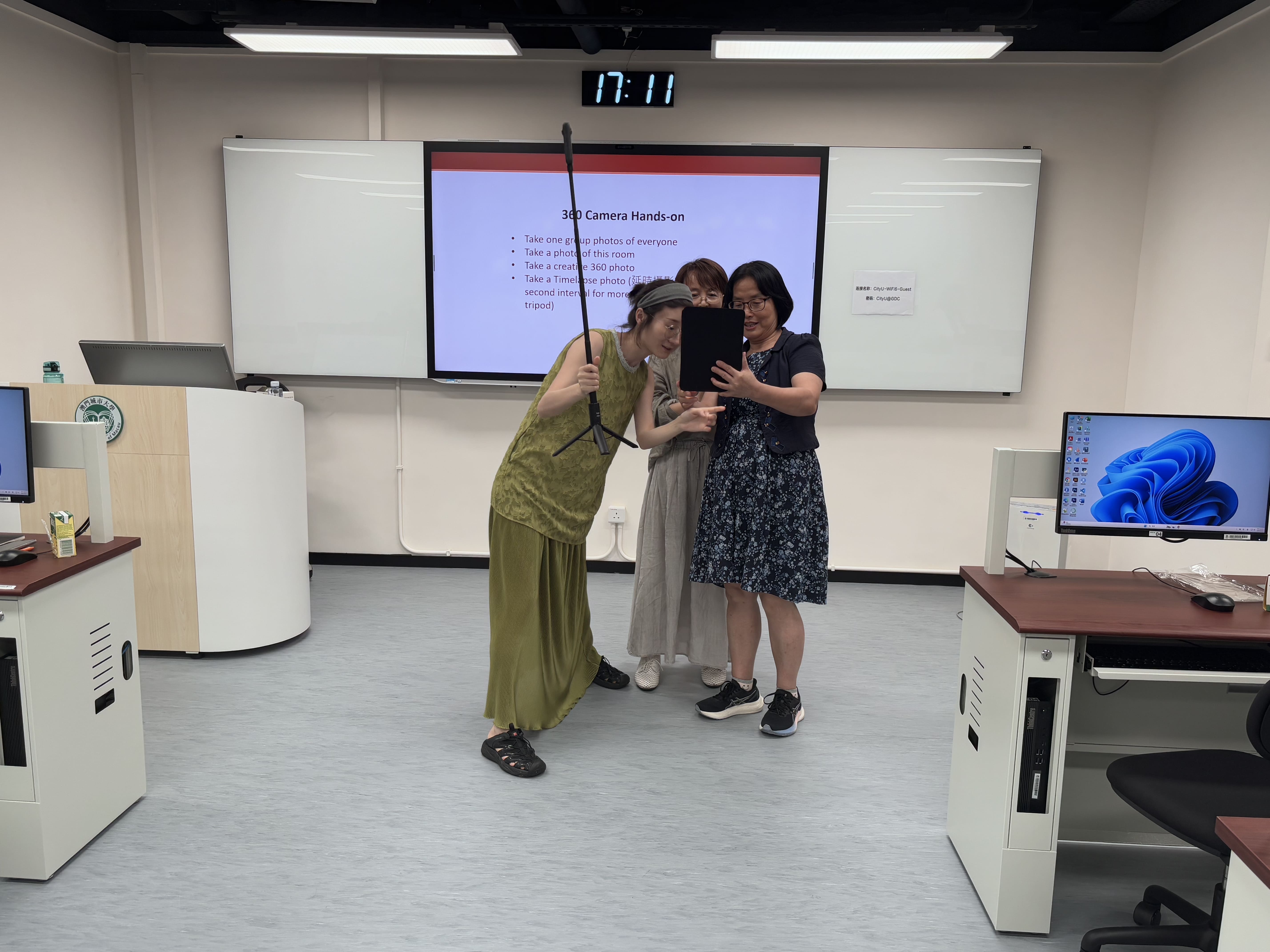
Afterwards, Professor Jong’s team demonstrated VR teaching practices. Under professional guidance, attendees experienced immersive VR lessons that broke the limits of traditional classrooms, enhancing learning engagement and enjoyment. The team also demonstrated 360-degree filming and the creation of web-based learning materials, providing participants with practical guidance on producing VR teaching resources.
As co-organizer, the School of Education, City University of Macau, aimed to strengthen collaboration between Macau and Hong Kong educators and explore new models of digital teaching. Assistant Professor Huang Biyun stated that the workshop deepened understanding of VR in education and promoted meaningful interaction between practitioners and researchers.
As VR technology continues to advance, it is expected to play an increasingly important role in inquiry-based learning, bringing new vitality to the education system. The workshop was warmly received by teachers and students and achieved complete success.