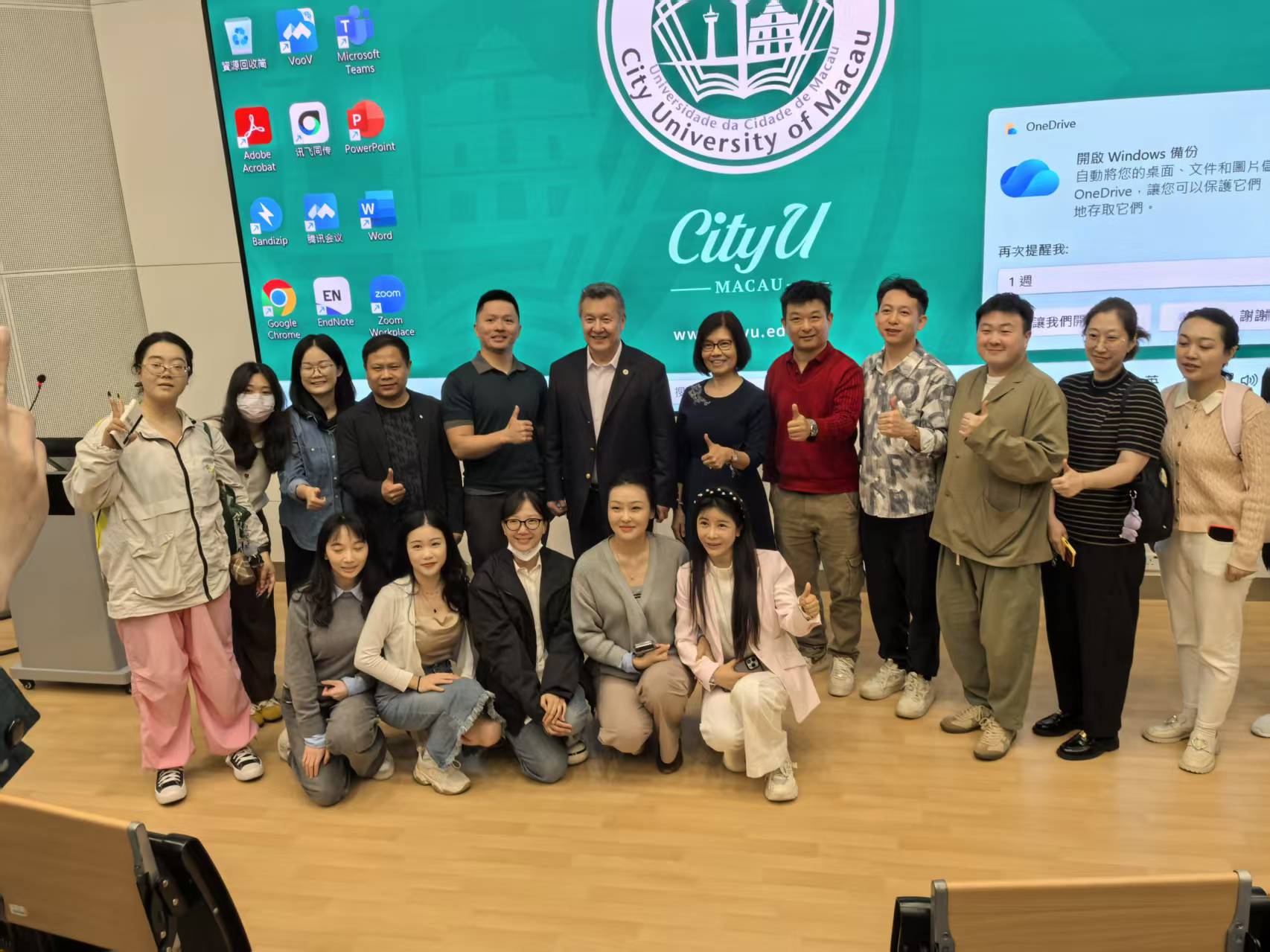
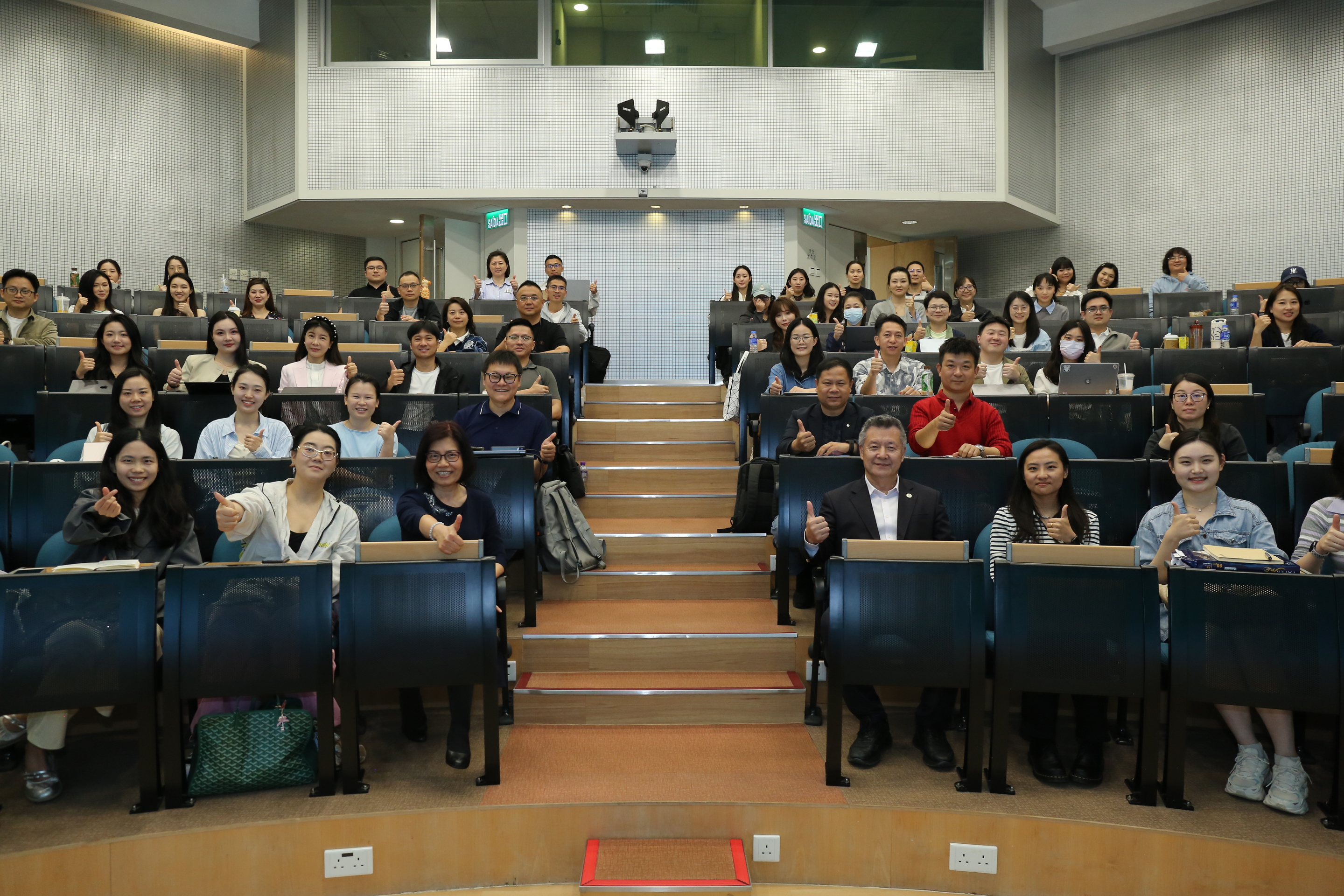
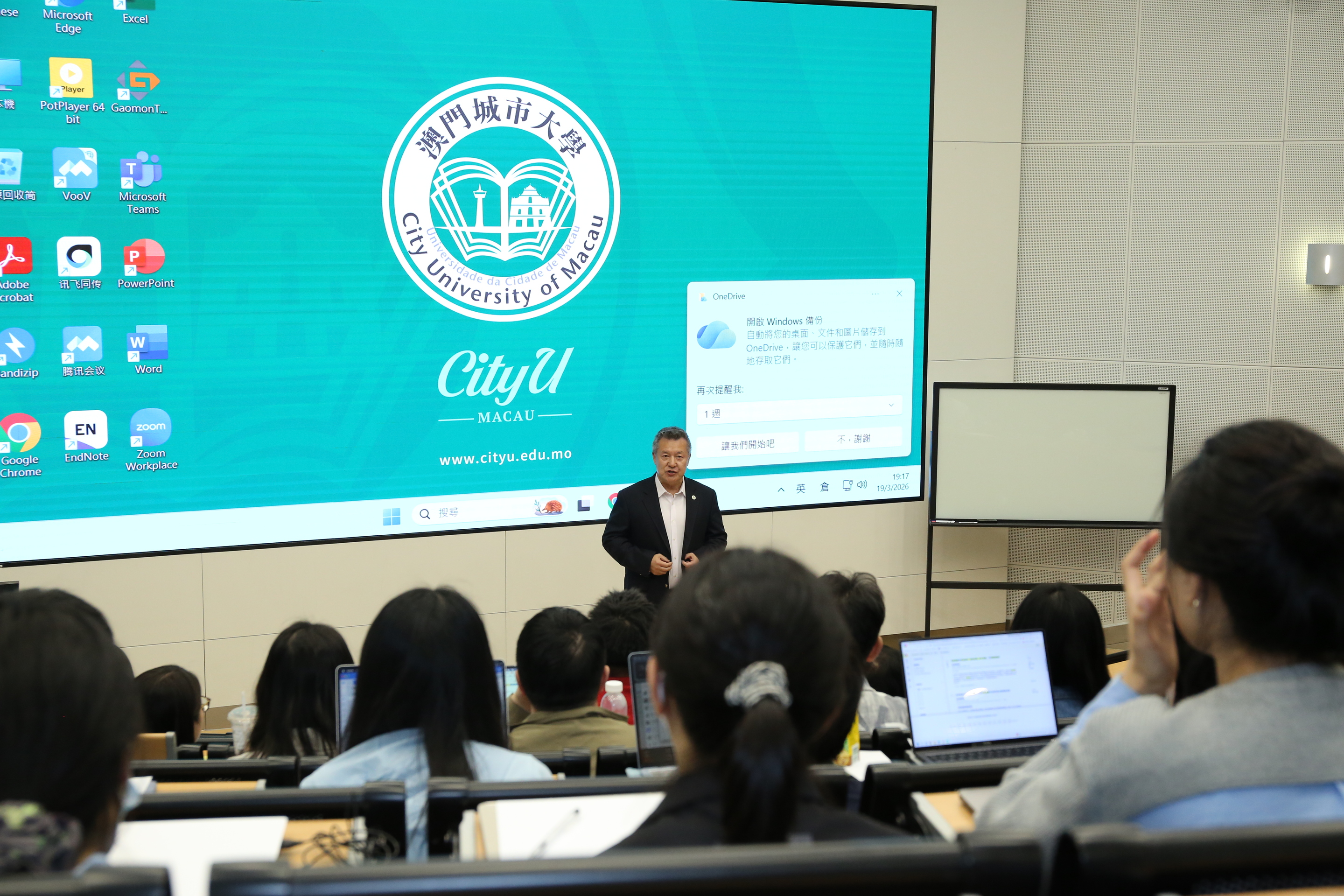
To effectively improve the quality of doctoral dissertation writing, help students clarify research directions and standardize research procedures, a centralized tutoring session for three PhD thesis preparation classes of the Faculty of Education, City University of Macau (CityU Macau), was successfully held at Conference Centre HG03, Hengqin Campus on March 19. Professor Liu Jun, President of CityU Macau, delivered an in-person lecture and engaged in face-to-face interactions with doctoral students. He shared core essentials of PhD dissertation research and writing, answered questions on the spot, and provided valuable guidance for the participants.
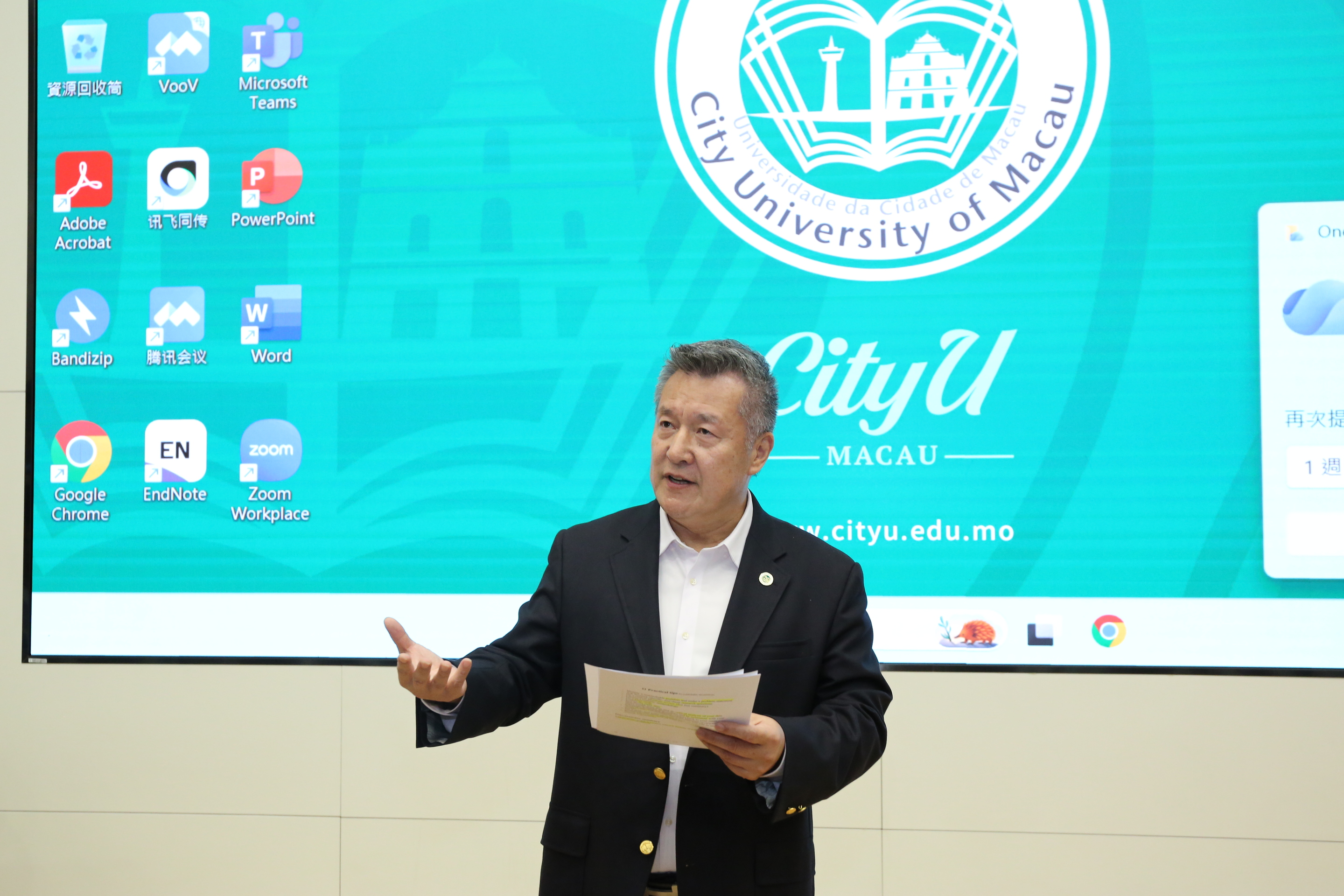
As a world-renowned expert in applied linguistics and intercultural communication, President Liu Jun boasts over 30 years of international university management experience and profound academic attainments in scholarly research and talent cultivation. He has long attached great importance to doctoral education at the University and consistently participates in postgraduate training activities in person to support students’ academic growth and career development. Centering on the key pain points in PhD thesis preparation, President Liu systematically and profoundly elaborated on three core modules: identifying research problems, formulating research questions, and designing dissertation titles. He illustrated his sharing with rich academic experience and typical research cases, and also explained key points in the application of research methods, delivering a pragmatic and highly instructive lecture.
In terms of identifying research problems, President Liu emphasized that research problems are the foundation of a doctoral dissertation and must feature distinct research value and researchability. Taking cutting-edge topics such as the supply-demand imbalance in integration of industry and education, communication paths of international Chinese language education, and the impact of AI tools on adolescents’ language expression as examples, he elaborated on how to discover valuable research topics. He pointed out that research problems should be described clearly and precisely with well-defined research boundaries. Scholars ought to identify research gaps and academic controversies while avoiding overly broad and empty research topics. He also demonstrated the methods of discovering and standardizing research problem statements with real cases including international students’ insufficient understanding of China’s national conditions and the supply-demand mismatch between universities and enterprises in industry-education integration, helping students straighten out their research thinking.
Regarding the formulation of research questions and selection of research methodologies, President Liu systematically summarized the core characteristics of four types of research questions: descriptive, comparative, relational and causal, and clarified the corresponding relationship between different types of research questions and research methods. He further distinguished the differences between qualitative and quantitative research. Qualitative research focuses on exploration and interpretation, revolving around "HOW" and "WHY" questions, while quantitative research requires clear hypothesis formulation and verification via scientific approaches.
During the session, Xiao Geyang (Grade 3 PhD student) and Song Ning (Grade 2 PhD student) shared their personal experience on stage. Xiao Geyang detailed her preparation for PhD dissertation defense, including the application of research methods and ideas for data analysis. Song Ning focused on thesis proposal writing and shared practical experience in confirming research problems, constructing research frameworks and conducting literature reviews. After their sharing, President Liu raised targeted questions and offered specific guidance on their choice of research methods and optimization of research logic. Taking their cases as examples, he guided all participating students to better grasp research methodologies and key essentials of dissertation writing.
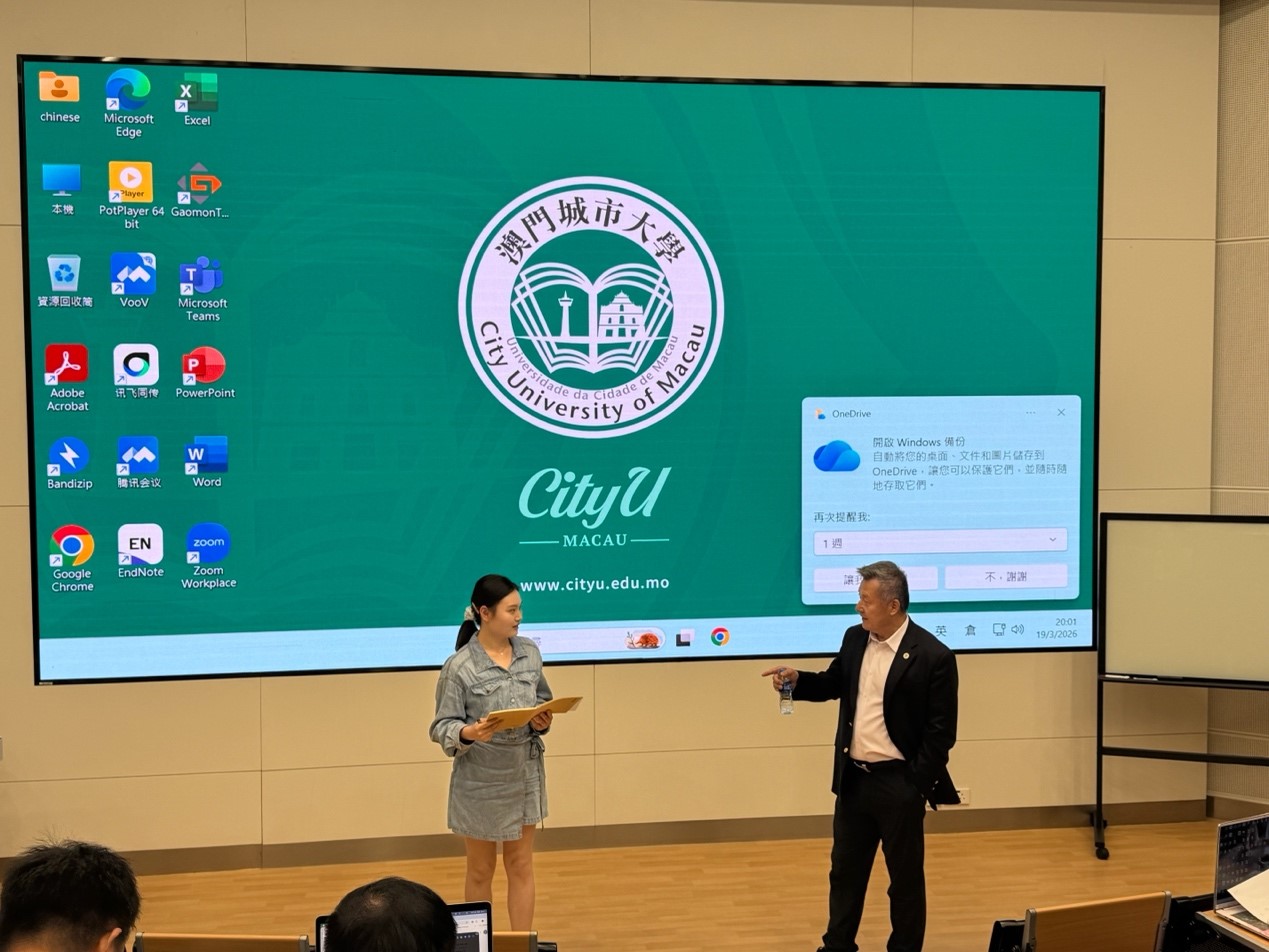
On designing dissertation titles, President Liu put forward clear requirements. He stressed that a high-quality dissertation title should be concise and refined, clearly presenting research content, key variables, research subjects and basic methodologies, as well as conveying research expectations intuitively. Clichéd expressions such as "A Survey on..." and "A Study on..." should be avoided. He commented on sample titles involving the transformation of Olympic champions’ experience and the recruitment of industry elites as university faculty members, instructing students to polish title expressions and enhance academic standardization and readability.
At the end of the lecture, President Liu summarized the key points of doctoral dissertation research and put forward earnest expectations for the students. First, students should define core researchable issues and construct a multi-dimensional and interconnected research problem system. Second, they shall conduct solid literature reviews to identify research gaps. Third, it is essential to select research methods scientifically and carry out preliminary pilot studies in advance. Fourth, students should uphold independent thinking, reduce over-reliance on AI tools, and refine every detail of dissertation writing. Fifth, they should base their research on personal academic interests and maintain long-term research enthusiasm. He also encouraged students to strengthen interdisciplinary exchanges, broaden research horizons, draw on research paradigms from diverse disciplines, and enhance the innovation of their studies.
In the interactive session, students actively raised questions concerning ambiguous research directions, difficulties in selecting research methods and non-standard title formulation encountered in thesis preparation. President Liu listened patiently to each question and provided targeted and practical suggestions based on his academic expertise and the University’s philosophy of talent cultivation. The atmosphere was warm and harmonious throughout the event. Students commented that the lecture was content-rich and highly pertinent. President Liu’s guidance pinpointed their core confusions, helping them clarify ideas for thesis preparation and greatly boosting their confidence in conducting academic research.
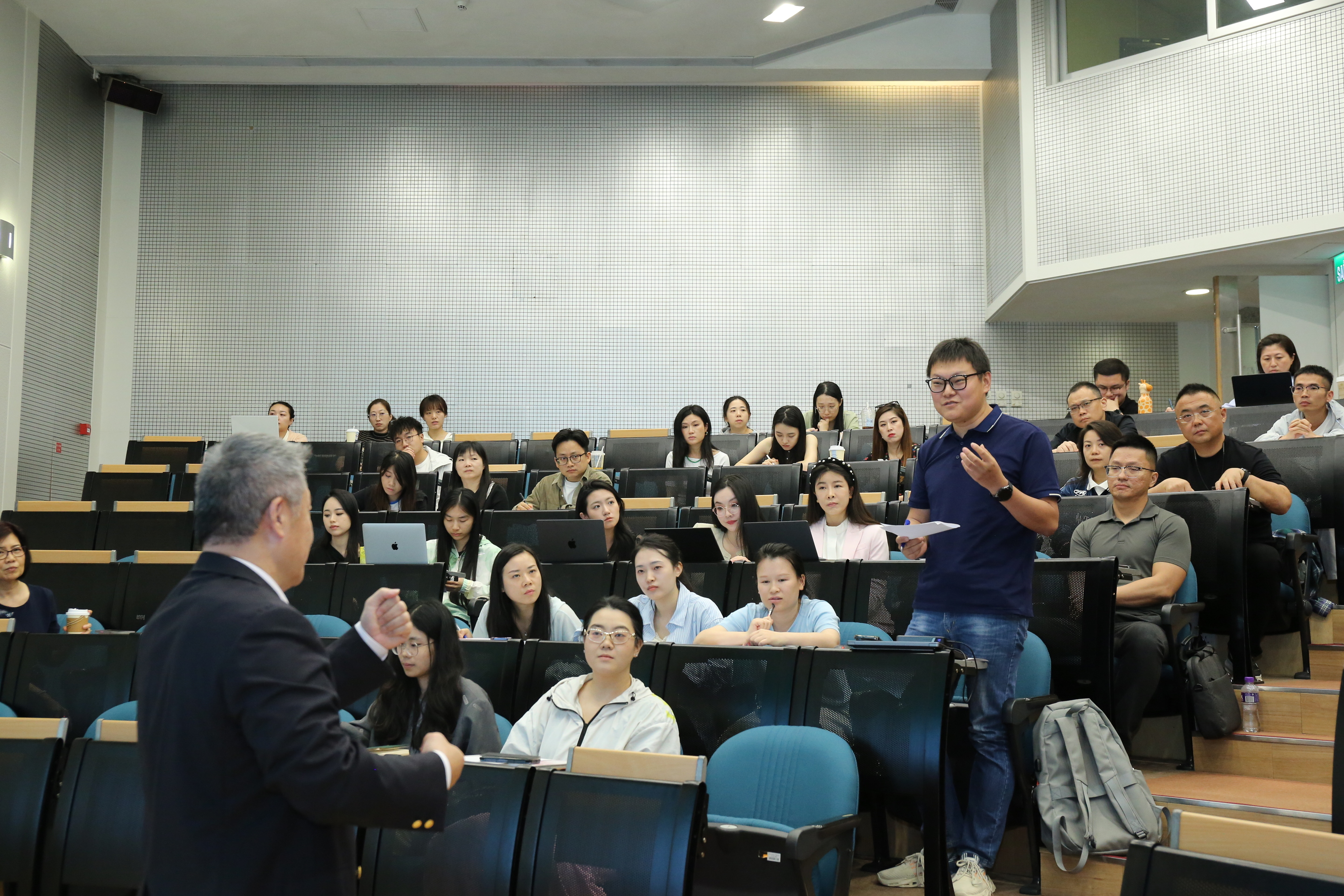
In her closing remarks, Dean Cheng Liying of the Faculty of Education stated that the University places high priority on doctoral postgraduate training. The Faculty will continue to optimize the training system, organize more high-quality academic lectures and exchange activities, and invite university leaders and academic experts to participate in person, so as to enhance doctoral students’ academic literacy and research capabilities.
President Liu Jun’s in-person lecture fully reflects CityU Macau’s great emphasis on doctoral education and builds a platform for students to communicate face-to-face with university leaders and academic experts. The session effectively clarified students’ confusions in thesis preparation, standardized their application of research methods, and laid a solid foundation for the smooth progress of doctoral dissertation writing and high-quality academic research. Moving forward, the Faculty of Education of CityU Macau will continuously improve the quality of talent cultivation and support students to forge ahead steadily on their academic journey.